Jeanie with the light brown hair
Borne, like a vapor, on the summer air
I see her tripping where the bright
streams play
Happy as the daisies that dance on her
way
Many were the wild notes her merry voice
would pour
Many were the blithe birds that warbled
them o'er
Oh! I dream of Jeannie with the light
brown hair
Floating, like a vapor, on the soft,
summer air
I long for Jeannie with the day dawn
smile
Radiant in gladness, warm with winning
guile
I hear her melodies, like joys gone by
Sighing round my heart o'er the fond
hopes that die
Sighing like the night wind and sobbing like
the rain
Wailing for the lost one that comes not
again
Oh! I long for Jeannie, and my heart
bows low
Never more to find her where the bright
waters flow
I sigh for Jeannie, but her light form
strayed
Far from the fond hearts round her
native glade
Her smiles have vanished and her sweet
songs flown
Flitting like the dreams that have
cheered us and gone
Now the nodding wild flow'rs may wither
on the shore
While her gentle fingers will cull them
no more
Oh! I sigh for Jeannie with the light
brown hair
Floating like a vapor, on the soft
summer air
---Contributed by Bill
Huntley, November 2004
B. Film
No String Attached
 |
No Strings Attached is a 2011 American romantic comedy film directed by Ivan Reitman and written by Elizabeth Meriwether. Starring Natalie Portman and Ashton Kutcher, the film is about two friends who decide to make a pact to have "no strings attached" casual sex without falling in love with each other. The film was released in the United States on January 21, 2011.
|
The Other Boleyn
Girl
 |
The Other
Boleyn Girl is a
2008 historical drama film directed
by Justin Chadwick. The screenplay by Peter Morgan was
adapted from the 2001 novel of the same name by Philippa Gregory. It is a romanticized account of the lives
of 16th-century aristocrats Mary Boleyn, one-time mistress of King Henry VIII, and her
sister, Anne, who became the monarch's ill-fated second wife, though
much history is distorted.
Production studio BBC Films also
owns the rights to adapt the sequel novel, The Boleyn Inheritance,
which tells the story of Anne of Cleves, Catherine Howard and Jane Parker.
|
C. Vocabularies to know
Dis-, Di-: prefix
away, apart
dissuade
|
discomfit
|
disburse
|
disarray
|
to turn a person away by persuasion
|
to undo; to thwart the plans of; to make uneasy
|
to take away from a purse ; to pay out, as from a fund
|
not arrayed or arranged properly; a state of disorder or confusion; disorderly dress
|
D. The differences between malignant and malicious
malignant
/məˈlɪɡ.nənt/ adjective |
A malignant disease or growth is likely to get worse and lead to death.
For
example: Is the tumour malignant or benign?
|
malicious
/məˈlɪʃ.əs/ adjective |
(1) intended
to harm or upset other people: Malicious gossip
(2) intended to cause damage to
a computer system, or to steal private information from a
computer system: protection against malicious software
|
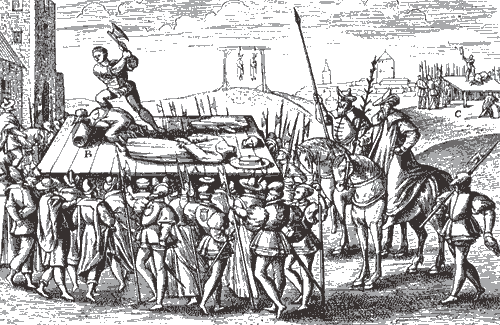
E. Decapitated Henry VIII
The six wives of Henry VIII
"divorced, beheaded, died; divorced, beheaded,
survived"
The wives of Henry VIII were the six queens consort wedded to Henry VIII, King of England between 1509 and 1547. Two of his six wives were
executed for treason.
F. Others
Peter Pan Neverland

The musical - Never never land
WEEK 44
1.canard (n.)before 1850, from French canard "a hoax," literally "a duck" (from Old French quanart, probably echoic of a duck's quack); said by Littré to be from the phrase vendre un canard à moitié "to half-sell a duck," thus, from some long-forgotten joke, "to cheat."
2.carnage (n.)c. 1600, from Middle French carnage (16c.), from Old Italian carnaggio "slaughter, murder," from Medieval Latin carnaticum "flesh," from Latin carnaticum "slaughter of animals," from carnem (nominative caro) "flesh," originally "a piece of flesh," from PIE root *(s)ker- (1) "to cut" (see shear (v.)). In English always used more of slaughters of men than beasts. Southey (1795) tried to make a verb of it.
3.defamatory (adj.)1590s, from Middle French diffamatoire, Medieval Latin diffamatorius "tending to defame," from diffamat-, past participle stem of diffamare (see defame).
4.deluge (v.)1590s; see deluge (n.). Related: Deluged; deluging.
deluge (n.)late 14c., from Old French deluge (12c.), earlier deluve, from Latin diluvium "flood, inundation," from diluere "wash away," from dis- "away" (see dis-) + -luere, comb. form of lavere "to wash" (see lave).
5.deprecate (v.)1620s, "to pray against or for deliverance from," from Latin deprecatus, past participle of deprecari "to pray (something) away" (see deprecation). Meaning "to express disapproval" is from 1640s. Related: Deprecated, deprecating.
6.devout (adj.)early 13c., from Old French devot "pious, devoted, assiduous," from Latin devotus "given up by vow, devoted," past participle of devovere "dedicate by vow" (see devotion).
7.diminutive (adj.)in grammar, late 14c. (also as a noun, "derivative word denoting a small or inferior example of what is meant by the word it is derived from"), from Old French diminutif (14c.), from Latin diminutivus, earlier deminutivus, from past participle stem of deminuere (see diminish).
8.dulcet (adj.)late 14c., from Old French doucet, diminutive of doux "sweet," earlier dulz, from Latin dulcis, from PIE *dlk-wi-, suffixed form of root *dlk-u- "sweet" (compare glucose).
9.excoriate (v.)early 15c., from Late Latin excoriatus, past participle of excoriare "flay, strip off the hide," from Latin ex "out, out of, off" (see ex-) + corium "hide, skin" (see corium). Figurative sense of "denounce, censure" first recorded in English 1708. Related: Excoriated; excoriating.
10.frail (adj.)mid-14c., "morally weak," from Old French fraile, frele "weak, frail, sickly, infirm" (12c., Modern French frêle), from Latin fragilis "easily broken" (see fragility). It is the Frenchified form of fragile. Sense of "easily destroyed, liable to break" in English is from late 14c. The U.S. slang noun meaning "a woman" is attested from 1908; perhaps with awareness of Shakespeare's "Frailty, thy name is woman."
11.futility (n.)1620s, from French futilité or directly from Latin futilitatem (nominative futilitas) "worthlessness, emptiness, vanity," from futilis "vain, worthless" (see futile). Hence, jocular futilitarian (1827, n. and adj.); futilitarianism.
12.impromptu (adv.)1660s, from French impromptu (1650s), from Latin in promptu "in readiness," from assimilated form of in- "into, in, on, upon" (see in- (2)) + promptu, ablative of promptus "ready, prepared; set forth, brought forward," from past participle of promere "to bring out," from pro "before, forward, for" (see pro-) + emere "to obtain" (see exempt (adj.)). From 1764 as an adjective; as a noun from 1680s.
13.libel (v.)mid-15c., "make an initial statement setting out a plaintiff's case," from libel (n.), which see for sense development. Meaning "defame or discredit by libelous statements" is from c. 1600. Related: Libeled; libelled; libeling; libelling; libellant; libellee.
libel (n.) Look up libel at Dictionary.com
c. 1300, "formal written statement, a writing of any kind," especially, in civil law, "plaintiff's statement of charges" (mid-14c.); from Old French libelle (fem.) "small book; (legal) charge, claim; writ; written report" (13c.), from Latin libellus "a little book, pamphlet; petition, written accusation, complaint," diminutive of liber "book" (see library). Meaning "false or defamatory statement" is from 1610s. Specific legal sense of "any published or written statement likely to harm a person's reputation" is first attested 1630s.
14.malevolent (adj.)c. 1500, from Middle French malivolent and directly from Latin malevolentem (nominative malevolens) "ill-disposed, spiteful, envious," from male "badly" (see mal-) + volentem (nominative volens), present participle of velle "to wish" (see will (v.)). Related: Malevolently.
15.nullify (v.)
1590s, from Late Latin nullificare "to esteem lightly, despise," literally "to make nothing," from Latin nullus "not any" (see null) + root of facere "to make" (see factitious). Related: Nullified; nullifying.
16.plaintiff (n.)
c. 1400, from Anglo-French pleintif (late 13c.), noun use of Old French plaintif "complaining; wretched, miserable," from plainte (see plaint). Identical with plaintive at first; the form that receded into legal usage retained the older -iff spelling.
17.potent (adj.)early 15c., from Latin potentem (nominative potens) "powerful," present participle of *potere "be powerful," from potis "powerful, able, capable; possible;" of persons, "better, preferable; chief, principal; strongest, foremost," from PIE root *poti- "powerful; lord" (source also of Sanskrit patih "master, husband," Greek posis, Lithuanian patis "husband"). Meaning "having sexual power" is first recorded 1899.
18.profuse (adj.) early 15c., "lavish, extravagant," from Latin profusus "spread out, lavish, extravagant," literally "poured forth," noun use of past participle of profundere "pour forth," from pro "forth" (see pro-) + fundere "to pour" (see found (v.2)). Meaning "bountiful" is from c. 1600. Related: Profusely; profuseness.
19.reputed (adj.)
1540s, "held in repute," past participle adjective from repute (v.). Meaning "supposed to be" is from 1570s. Related: Reputedly.
20.technology (n.) 1610s, "a discourse or treatise on an art or the arts," from Greek tekhnologia "systematic treatment of an art, craft, or technique," originally referring to grammar, from tekhno- (see techno-) + -logy. The meaning "study of mechanical and industrial arts" (Century Dictionary, 1902, gives examples of "spinning, metal-working, or brewing") is first recorded 1859. High technology attested from 1964; short form high-tech is from 1972.
2.carnage (n.)c. 1600, from Middle French carnage (16c.), from Old Italian carnaggio "slaughter, murder," from Medieval Latin carnaticum "flesh," from Latin carnaticum "slaughter of animals," from carnem (nominative caro) "flesh," originally "a piece of flesh," from PIE root *(s)ker- (1) "to cut" (see shear (v.)). In English always used more of slaughters of men than beasts. Southey (1795) tried to make a verb of it.
3.defamatory (adj.)1590s, from Middle French diffamatoire, Medieval Latin diffamatorius "tending to defame," from diffamat-, past participle stem of diffamare (see defame).
4.deluge (v.)1590s; see deluge (n.). Related: Deluged; deluging.
deluge (n.)late 14c., from Old French deluge (12c.), earlier deluve, from Latin diluvium "flood, inundation," from diluere "wash away," from dis- "away" (see dis-) + -luere, comb. form of lavere "to wash" (see lave).
5.deprecate (v.)1620s, "to pray against or for deliverance from," from Latin deprecatus, past participle of deprecari "to pray (something) away" (see deprecation). Meaning "to express disapproval" is from 1640s. Related: Deprecated, deprecating.
6.devout (adj.)early 13c., from Old French devot "pious, devoted, assiduous," from Latin devotus "given up by vow, devoted," past participle of devovere "dedicate by vow" (see devotion).
7.diminutive (adj.)in grammar, late 14c. (also as a noun, "derivative word denoting a small or inferior example of what is meant by the word it is derived from"), from Old French diminutif (14c.), from Latin diminutivus, earlier deminutivus, from past participle stem of deminuere (see diminish).
8.dulcet (adj.)late 14c., from Old French doucet, diminutive of doux "sweet," earlier dulz, from Latin dulcis, from PIE *dlk-wi-, suffixed form of root *dlk-u- "sweet" (compare glucose).
9.excoriate (v.)early 15c., from Late Latin excoriatus, past participle of excoriare "flay, strip off the hide," from Latin ex "out, out of, off" (see ex-) + corium "hide, skin" (see corium). Figurative sense of "denounce, censure" first recorded in English 1708. Related: Excoriated; excoriating.
10.frail (adj.)mid-14c., "morally weak," from Old French fraile, frele "weak, frail, sickly, infirm" (12c., Modern French frêle), from Latin fragilis "easily broken" (see fragility). It is the Frenchified form of fragile. Sense of "easily destroyed, liable to break" in English is from late 14c. The U.S. slang noun meaning "a woman" is attested from 1908; perhaps with awareness of Shakespeare's "Frailty, thy name is woman."
11.futility (n.)1620s, from French futilité or directly from Latin futilitatem (nominative futilitas) "worthlessness, emptiness, vanity," from futilis "vain, worthless" (see futile). Hence, jocular futilitarian (1827, n. and adj.); futilitarianism.
12.impromptu (adv.)1660s, from French impromptu (1650s), from Latin in promptu "in readiness," from assimilated form of in- "into, in, on, upon" (see in- (2)) + promptu, ablative of promptus "ready, prepared; set forth, brought forward," from past participle of promere "to bring out," from pro "before, forward, for" (see pro-) + emere "to obtain" (see exempt (adj.)). From 1764 as an adjective; as a noun from 1680s.
13.libel (v.)mid-15c., "make an initial statement setting out a plaintiff's case," from libel (n.), which see for sense development. Meaning "defame or discredit by libelous statements" is from c. 1600. Related: Libeled; libelled; libeling; libelling; libellant; libellee.
libel (n.) Look up libel at Dictionary.com
c. 1300, "formal written statement, a writing of any kind," especially, in civil law, "plaintiff's statement of charges" (mid-14c.); from Old French libelle (fem.) "small book; (legal) charge, claim; writ; written report" (13c.), from Latin libellus "a little book, pamphlet; petition, written accusation, complaint," diminutive of liber "book" (see library). Meaning "false or defamatory statement" is from 1610s. Specific legal sense of "any published or written statement likely to harm a person's reputation" is first attested 1630s.
14.malevolent (adj.)c. 1500, from Middle French malivolent and directly from Latin malevolentem (nominative malevolens) "ill-disposed, spiteful, envious," from male "badly" (see mal-) + volentem (nominative volens), present participle of velle "to wish" (see will (v.)). Related: Malevolently.
15.nullify (v.)
1590s, from Late Latin nullificare "to esteem lightly, despise," literally "to make nothing," from Latin nullus "not any" (see null) + root of facere "to make" (see factitious). Related: Nullified; nullifying.
16.plaintiff (n.)
c. 1400, from Anglo-French pleintif (late 13c.), noun use of Old French plaintif "complaining; wretched, miserable," from plainte (see plaint). Identical with plaintive at first; the form that receded into legal usage retained the older -iff spelling.
17.potent (adj.)early 15c., from Latin potentem (nominative potens) "powerful," present participle of *potere "be powerful," from potis "powerful, able, capable; possible;" of persons, "better, preferable; chief, principal; strongest, foremost," from PIE root *poti- "powerful; lord" (source also of Sanskrit patih "master, husband," Greek posis, Lithuanian patis "husband"). Meaning "having sexual power" is first recorded 1899.
18.profuse (adj.) early 15c., "lavish, extravagant," from Latin profusus "spread out, lavish, extravagant," literally "poured forth," noun use of past participle of profundere "pour forth," from pro "forth" (see pro-) + fundere "to pour" (see found (v.2)). Meaning "bountiful" is from c. 1600. Related: Profusely; profuseness.
19.reputed (adj.)
1540s, "held in repute," past participle adjective from repute (v.). Meaning "supposed to be" is from 1570s. Related: Reputedly.
20.technology (n.) 1610s, "a discourse or treatise on an art or the arts," from Greek tekhnologia "systematic treatment of an art, craft, or technique," originally referring to grammar, from tekhno- (see techno-) + -logy. The meaning "study of mechanical and industrial arts" (Century Dictionary, 1902, gives examples of "spinning, metal-working, or brewing") is first recorded 1859. High technology attested from 1964; short form high-tech is from 1972.
WEEK 45
1.appalled (adj.)1570s, "enfeebled;" c. 1600, "dismayed;" past participle adjective from appall.
2.bagatelle (n.)1630s, "a trifle," from French bagatelle "knick-knack, bauble, trinket" (16c.), from Italian bagatella "a trifle," diminutive of Latin baca "berry." As "a piece of light music," it is attested from 1827.
3.brigand (n.)
c. 1400, "lightly armed foot soldier," from Old French brigand (14c.), from Italian brigante "trooper, skirmisher, foot soldier," from brigare (see brigade). Sense of "one who lives by pillaging" is from early 15c., reflecting the lack of distinction between professional mercenary armies and armed, organized criminals.
4.callow (adj.)
Old English calu "bare, bald," from Proto-Germanic *kalwa- (source also of Middle Dutch calu, Dutch kaal, Old High German kalo, German Kahl), from PIE root *gal- (1) "bald, naked" (source also of Russian golyi "smooth, bald"). From young birds with no feathers, meaning extended to any young inexperienced thing or creature (1570s). Apparently not related to Latin calvus "bald."
5.corpulent (adj.)late 14c., from Old French corpulent "stout, fat," from Latin corpulentus "fleshy, fat," from corpus "body" (see corporeal) + -ulentus "full of." Leigh Hunt was sent to prison for two years for calling the Prince Regent corpulent in print in 1812.
6.decapitate (v.)1610s, from French décapiter (14c.), from Late Latin decapitatus past participle of decapitare, from Latin de- "off" (see de-) + caput (genitive capitis) "head" (see capitulum). Related: Decapitated; decapitating.
7.emissary (n.)1620s, from French émissaire (17c.) or directly from Latin emissarius "a scout, a spy," literally "that is sent out," from emissus, past participle of emittere "send forth" (see emit).
8.livid (adj.)early 15c., "of a bluish-leaden color," from Old French livide (13c.) and directly from Latin lividus "of a bluish color, black-and-blue," figuratively "envious, spiteful, malicious," from livere "be bluish," earlier *slivere, from PIE *sliwo-, suffixed form of root *(s)leie- "bluish" (source also of Old Church Slavonic and Russian sliva "plum;" Lithuanian slywas "plum;" Old Irish li, Welsh lliw "color, splendor," Old English sla "sloe"). Somehow it has come to be associated with "pale, colorless." The sense of "furiously angry" (1912) is from the notion of being livid with rage.
9.martinet (n.)1670s, "system of strict discipline," from the name of Jean Martinet (killed at siege of Duisburg, 1672), lieutenant colonel in the Régiment du Roi, who in 1668 was appointed inspector general of the infantry. "It was his responsibility to introduce and enforce the drill and strict discipline of the French regiment of Guards across the whole infantry." [Olaf van Minwegen, "The Dutch Army and the Military Revolutions 1588-1688," 2006] The meaning "an officer who is a stickler for strict discipline" is first attested 1779 in English. The surname is a diminutive of Latin Martinus (see Martin).
10.penchant (n.)1670s, from French penchant, noun use of present participle of Old French pencher "to incline," from Vulgar Latin *pendicare, a frequentative formed from Latin pendere "to hang" (see pendant (n.)).
11.raconteur (n.)"storyteller, person skilled in relating anecdotes," 1828, from French raconteur, from raconter "to recount, tell, narrate," from re- (see re-) + Old French aconter "to count, render account" (see account (v.); and compare recount (v.1)). Related: Raconteuse (fem.).
12.rail (n.1)"horizontal bar passing from one post or support to another," c. 1300, from Old French reille "bolt, bar," from Vulgar Latin *regla, from Latin regula "straight stick," diminutive form related to regere "to straighten, guide" (see regal). Used figuratively for thinness from 1872. To be off the rails in a figurative sense is from 1848, an image from the railroads. In U.S. use, "A piece of timber, cleft, hewed, or sawed, inserted in upright posts for fencing" [Webster, 1830].
rail (n.2) Look up rail at Dictionary.com
"small wading bird," mid-15c., from Old French raale (13c.), related to râler "to rattle," of unknown origin, perhaps imitative of its cry.
foot-rail (n.) Look up foot-rail at Dictionary.com
1861, from foot (n.) + rail (n.1).
rail (v.2) Look up rail at Dictionary.com
"fence in with rails," late 14c., from rail (n.1). Related: Railed; railing.
13.raiment (n.)c. 1400, "clothing, vesture" (archaic), shortening of arayment "clothing" (late 14c.), from Anglo-French araiement, from Old French areement, from areer "to array" (see array (v.)).
14.rift (n.)early 14c., "a split, act of splitting," from a Scandinavian source (compare Danish and Norwegian rift "a cleft," Old Icelandic ript (pronounced "rift") "breach;" related to Old Norse ripa "to break a contract" (see riven). Figurative use from 1620s. Geological sense from 1921. As a verb, c. 1300.
15.ruminate (v.)1530s, "to turn over in the mind," also "to chew cud" (1540s), from Latin ruminatus, past participle of ruminare "to chew the cud; turn over in the mind," from rumen (genitive ruminis) "gullet," of uncertain origin. Related: Ruminated; ruminating.
16.sullen (adj.)1570s, alteration of Middle English soleyn "unique, singular," from Anglo-French *solein, formed on the pattern of Old French solain "lonely," from soul "single," from Latin solus "by oneself, alone" (see sole (adj.)). The sense shift in Middle English from "solitary" to "morose" (i.e. "remaining alone through ill-humor") occurred late 14c. Related: Sullenly; sullenness.
17.taut (adj.)mid-13c., tohte "stretched or pulled tight," possibly from tog-, past participle stem of Old English teon "to pull, drag," from Proto-Germanic *tugn, from PIE *deuk- "to lead" (see duke (n.)), which would connect it to tow (v.) and tie. Related: Tautness.
18.termagant (n.)c. 1500, "violent, overbearing person" (especially of women), from Teruagant, Teruagaunt (c. 1200), name of a fictitious Muslim deity appearing in medieval morality plays, from Old French Tervagant, a proper name in Chanson de Roland (c. 1100), of uncertain origin. As an adjective from 1590s.
19.wistful (adj.)1610s, "closely attentive," perhaps from obsolete wistly "intently" (c. 1500), of uncertain origin. Perhaps formed on the model of wishful. Middle English wistful meant "bountiful, well-supplied," from Old English wist "provisions." The meaning of "longingly pensive, musing" is by 1714. Related: Wistfully; wistfulness.
20.yen (n.1)Japanese monetary unit, 1875, from Japanese yen, from Chinese yuan "round, round object, circle, dollar."
yen (n.2) Look up yen at Dictionary.com
"sharp desire, hunger," 1906, earlier yen-yen (1900), yin (1876) "intense craving for opium," from Chinese (Cantonese) yan "craving," or from a Beijing dialect word for "smoke." Reinforced in English by influence of yearn.
2.bagatelle (n.)1630s, "a trifle," from French bagatelle "knick-knack, bauble, trinket" (16c.), from Italian bagatella "a trifle," diminutive of Latin baca "berry." As "a piece of light music," it is attested from 1827.
3.brigand (n.)
c. 1400, "lightly armed foot soldier," from Old French brigand (14c.), from Italian brigante "trooper, skirmisher, foot soldier," from brigare (see brigade). Sense of "one who lives by pillaging" is from early 15c., reflecting the lack of distinction between professional mercenary armies and armed, organized criminals.
4.callow (adj.)
Old English calu "bare, bald," from Proto-Germanic *kalwa- (source also of Middle Dutch calu, Dutch kaal, Old High German kalo, German Kahl), from PIE root *gal- (1) "bald, naked" (source also of Russian golyi "smooth, bald"). From young birds with no feathers, meaning extended to any young inexperienced thing or creature (1570s). Apparently not related to Latin calvus "bald."
5.corpulent (adj.)late 14c., from Old French corpulent "stout, fat," from Latin corpulentus "fleshy, fat," from corpus "body" (see corporeal) + -ulentus "full of." Leigh Hunt was sent to prison for two years for calling the Prince Regent corpulent in print in 1812.
6.decapitate (v.)1610s, from French décapiter (14c.), from Late Latin decapitatus past participle of decapitare, from Latin de- "off" (see de-) + caput (genitive capitis) "head" (see capitulum). Related: Decapitated; decapitating.
7.emissary (n.)1620s, from French émissaire (17c.) or directly from Latin emissarius "a scout, a spy," literally "that is sent out," from emissus, past participle of emittere "send forth" (see emit).
8.livid (adj.)early 15c., "of a bluish-leaden color," from Old French livide (13c.) and directly from Latin lividus "of a bluish color, black-and-blue," figuratively "envious, spiteful, malicious," from livere "be bluish," earlier *slivere, from PIE *sliwo-, suffixed form of root *(s)leie- "bluish" (source also of Old Church Slavonic and Russian sliva "plum;" Lithuanian slywas "plum;" Old Irish li, Welsh lliw "color, splendor," Old English sla "sloe"). Somehow it has come to be associated with "pale, colorless." The sense of "furiously angry" (1912) is from the notion of being livid with rage.
9.martinet (n.)1670s, "system of strict discipline," from the name of Jean Martinet (killed at siege of Duisburg, 1672), lieutenant colonel in the Régiment du Roi, who in 1668 was appointed inspector general of the infantry. "It was his responsibility to introduce and enforce the drill and strict discipline of the French regiment of Guards across the whole infantry." [Olaf van Minwegen, "The Dutch Army and the Military Revolutions 1588-1688," 2006] The meaning "an officer who is a stickler for strict discipline" is first attested 1779 in English. The surname is a diminutive of Latin Martinus (see Martin).
10.penchant (n.)1670s, from French penchant, noun use of present participle of Old French pencher "to incline," from Vulgar Latin *pendicare, a frequentative formed from Latin pendere "to hang" (see pendant (n.)).
11.raconteur (n.)"storyteller, person skilled in relating anecdotes," 1828, from French raconteur, from raconter "to recount, tell, narrate," from re- (see re-) + Old French aconter "to count, render account" (see account (v.); and compare recount (v.1)). Related: Raconteuse (fem.).
12.rail (n.1)"horizontal bar passing from one post or support to another," c. 1300, from Old French reille "bolt, bar," from Vulgar Latin *regla, from Latin regula "straight stick," diminutive form related to regere "to straighten, guide" (see regal). Used figuratively for thinness from 1872. To be off the rails in a figurative sense is from 1848, an image from the railroads. In U.S. use, "A piece of timber, cleft, hewed, or sawed, inserted in upright posts for fencing" [Webster, 1830].
rail (n.2) Look up rail at Dictionary.com
"small wading bird," mid-15c., from Old French raale (13c.), related to râler "to rattle," of unknown origin, perhaps imitative of its cry.
foot-rail (n.) Look up foot-rail at Dictionary.com
1861, from foot (n.) + rail (n.1).
rail (v.2) Look up rail at Dictionary.com
"fence in with rails," late 14c., from rail (n.1). Related: Railed; railing.
13.raiment (n.)c. 1400, "clothing, vesture" (archaic), shortening of arayment "clothing" (late 14c.), from Anglo-French araiement, from Old French areement, from areer "to array" (see array (v.)).
14.rift (n.)early 14c., "a split, act of splitting," from a Scandinavian source (compare Danish and Norwegian rift "a cleft," Old Icelandic ript (pronounced "rift") "breach;" related to Old Norse ripa "to break a contract" (see riven). Figurative use from 1620s. Geological sense from 1921. As a verb, c. 1300.
15.ruminate (v.)1530s, "to turn over in the mind," also "to chew cud" (1540s), from Latin ruminatus, past participle of ruminare "to chew the cud; turn over in the mind," from rumen (genitive ruminis) "gullet," of uncertain origin. Related: Ruminated; ruminating.
16.sullen (adj.)1570s, alteration of Middle English soleyn "unique, singular," from Anglo-French *solein, formed on the pattern of Old French solain "lonely," from soul "single," from Latin solus "by oneself, alone" (see sole (adj.)). The sense shift in Middle English from "solitary" to "morose" (i.e. "remaining alone through ill-humor") occurred late 14c. Related: Sullenly; sullenness.
17.taut (adj.)mid-13c., tohte "stretched or pulled tight," possibly from tog-, past participle stem of Old English teon "to pull, drag," from Proto-Germanic *tugn, from PIE *deuk- "to lead" (see duke (n.)), which would connect it to tow (v.) and tie. Related: Tautness.
18.termagant (n.)c. 1500, "violent, overbearing person" (especially of women), from Teruagant, Teruagaunt (c. 1200), name of a fictitious Muslim deity appearing in medieval morality plays, from Old French Tervagant, a proper name in Chanson de Roland (c. 1100), of uncertain origin. As an adjective from 1590s.
19.wistful (adj.)1610s, "closely attentive," perhaps from obsolete wistly "intently" (c. 1500), of uncertain origin. Perhaps formed on the model of wishful. Middle English wistful meant "bountiful, well-supplied," from Old English wist "provisions." The meaning of "longingly pensive, musing" is by 1714. Related: Wistfully; wistfulness.
20.yen (n.1)Japanese monetary unit, 1875, from Japanese yen, from Chinese yuan "round, round object, circle, dollar."
yen (n.2) Look up yen at Dictionary.com
"sharp desire, hunger," 1906, earlier yen-yen (1900), yin (1876) "intense craving for opium," from Chinese (Cantonese) yan "craving," or from a Beijing dialect word for "smoke." Reinforced in English by influence of yearn.